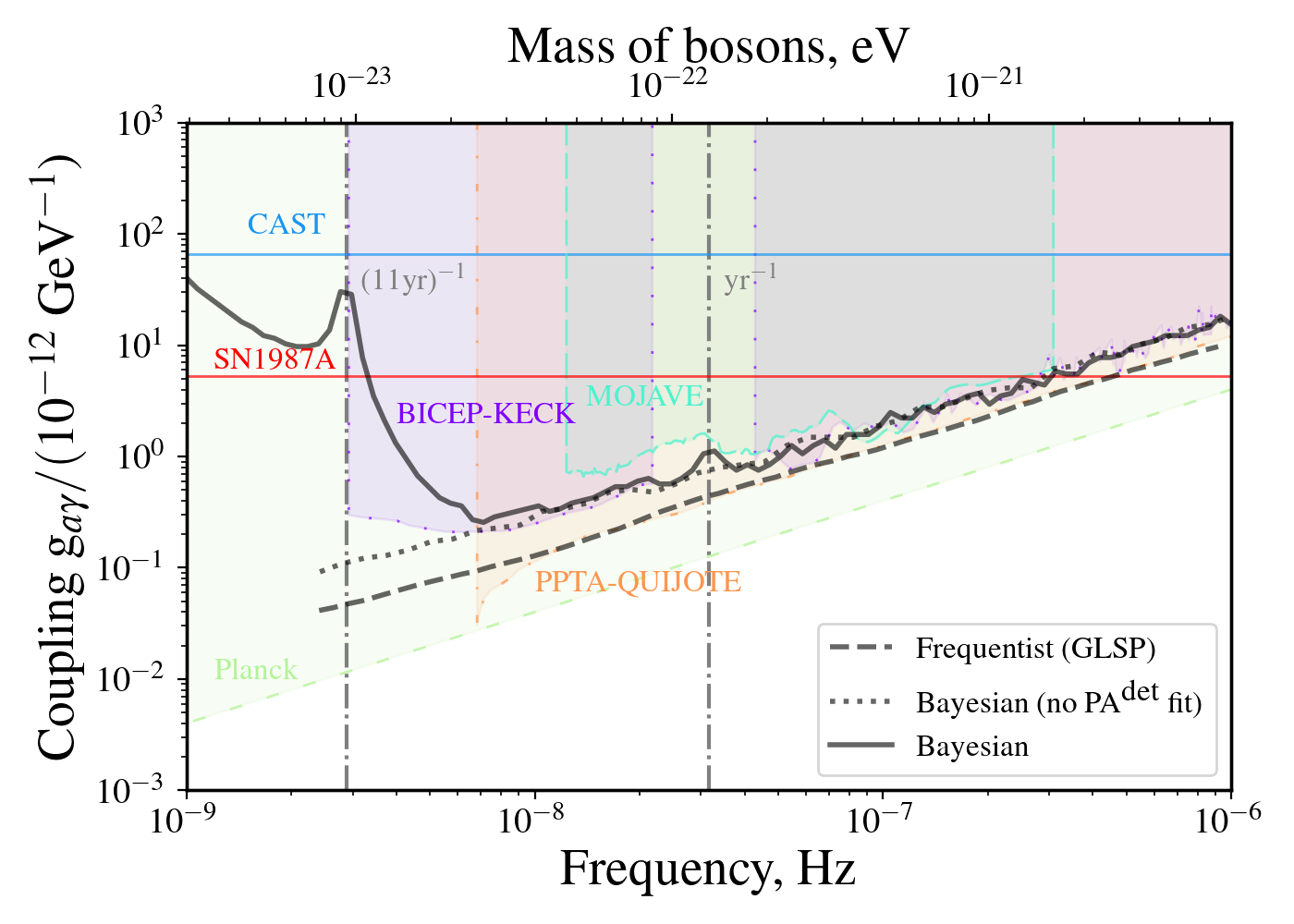
Searches for signatures of ultralight axion dark matter in polarimetry data of the European Pulsar Timing Array
What it is about
If dark matter is light enough it behaves less like a collection of particles than like a wave filling the galaxy. A polarised beam crossing that wave would have its polarisation angle oscillate slowly, at a frequency set by the dark matter mass. Pulsars provide highly polarised beams and decades of monitoring, so we searched for that oscillation in European Pulsar Timing Array data.